Molecular Biology

Welcome to our Molecular Biology Blog, your source for updates on molecular research, lab techniques, and new product releases. Stay inspired with the latest insights and innovations shaping the field.
-
- August 05, 2026
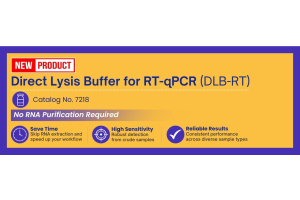
Skip RNA Extraction. Go Directly to RT-qPCR
RNA extraction remains one of the most time-consuming and loss-prone steps in RT-qPCR workflows. Column-based purification adds multiple handling steps, increases the risk of sample loss and RNA degradation, and adds reagent and plasticware costs. For laboratories
-
- August 04, 2026
Bringing Gene Expression into Focus
Cells continuously fine‑tune their gene expression in response to extracellular signals, environmental stress, and developmental cues. These dynamic changes drive core processes such as proliferation, differentiation, inflammation, and survival. Knowing when and
-
- July 01, 2026
Reliable, high-yield RNA synthesis should support your research — not slow it down. In vitro transcription (IVT) remains one of the most widely used approaches for cell-free RNA synthesis, enabling rapid generation of RNA from DNA templates using the high specificity and processivity of T7 RNA polymerase.
-
- March 17, 2026
Human genetic variation in APOE (Apolipoprotein E) and MAPT gene (Microtubule Associated Protein Tau) significantly influences risk for Alzheimer’s disease (AD) and tauopathies including frontotemporal dementia (FTD) and progressive supranuclear palsy. APOE alleles (ε2, ε3, ε4) primarily affect glial
-
- March 02, 2026
We can now provide neurons and astrocytes with defined MAPT haplotypes, offering researchers access to cells selected by genetic background that is directly relevant to tau biology and neurodegenerative disease research.
What’s new?
- MAPT H1/H2 genotyping using SNP rs8070723
- H1c sub-haplotype identification
-
- February 12, 2026
In CNS research, understanding disease mechanisms goes beyond tracking individual biomarkers—it requires insight into how entire biological pathways are regulated. From blood–brain barrier (BBB) integrity to glial activation and neuroinflammatory signaling, meaningful studies depend on high-resolution
-
- February 08, 2026
APOE genotype–specific astrocyte biology has emerged as a central driver of Alzheimer’s disease and neurodegenerative risk. Recent studies demonstrate that the APOE4/4 genotype profoundly reshapes astrocyte function across multiple pathways, including lipid metabolism, neuroinflammatory signaling, and
-
- October 06, 2025
We are excited to announce and launch two new products for Wnt/β-catenin signaling research: the TCF/LEF Dual Reporter Vector (TDRV, Catalog No. 9038) and the Luciferase Assay Kit (LAK, Catalog No. 9048).
The TDRV provides the reporter system, and the LAK provides the robust, accurate measurement,
-
- September 30, 2025
Telomeric repeat–containing RNA (TERRA) plays a vital role in telomere biology, influencing telomerase activity, chromosome stability, and cellular aging. Abnormal TERRA expression has been linked to cancer, aging, and age-related diseases. But detecting TERRA has always been a challenge due to:
-
- July 30, 2025
If your research depends on DNA, RNA, or protein lysates from human primary cells, you know how challenging and expensive it can be to isolate these materials yourself. That’s where ScienCell’s Human Cell Pellets come in, offering an opportunity to work with primary cells without the high cost and time