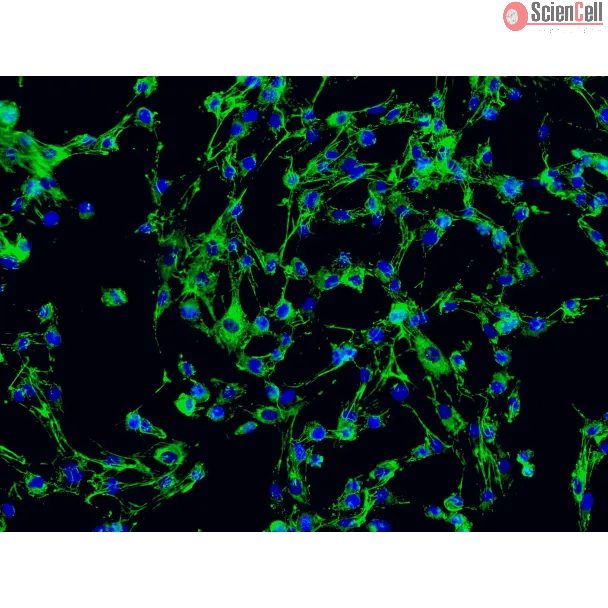
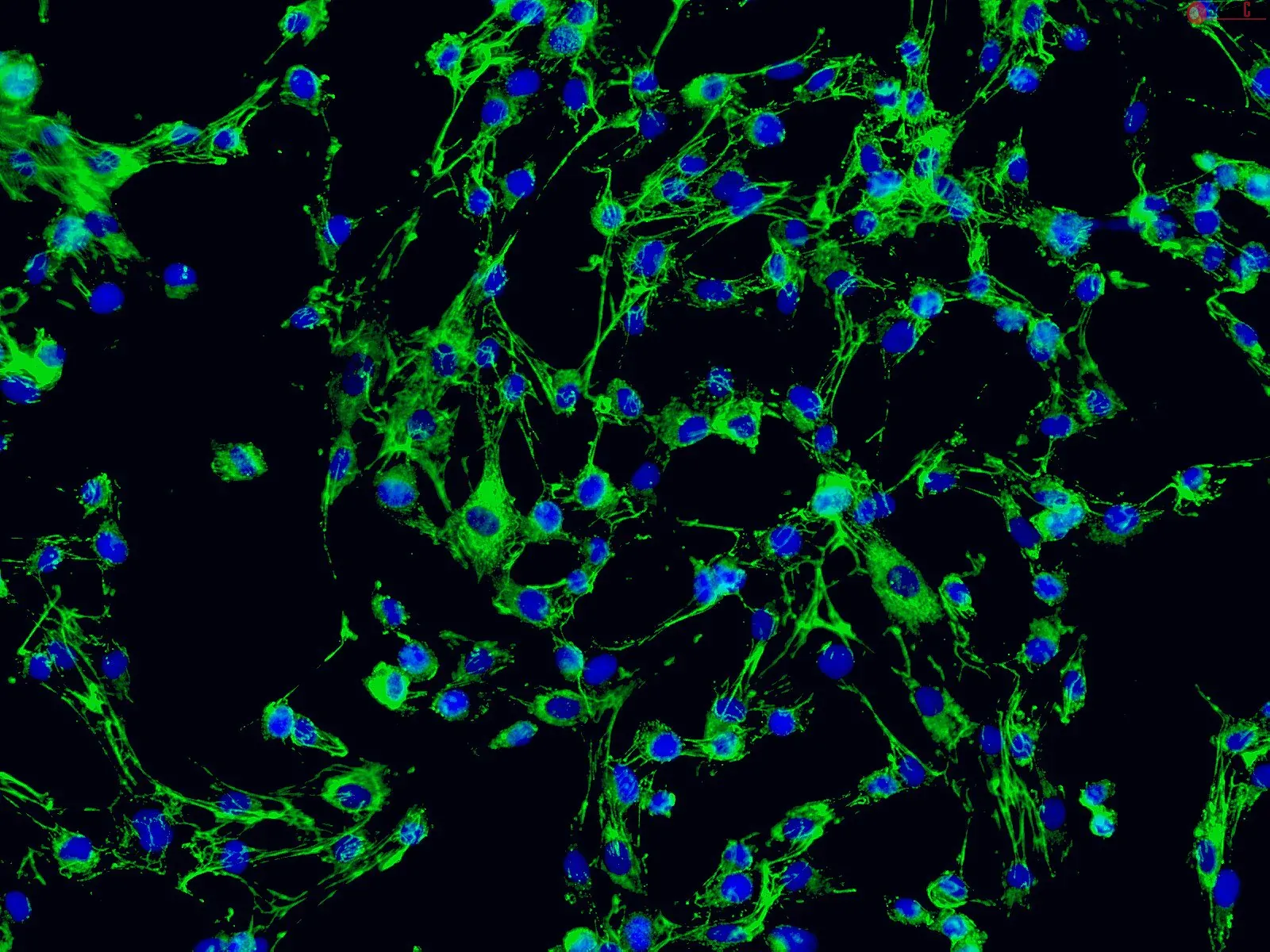
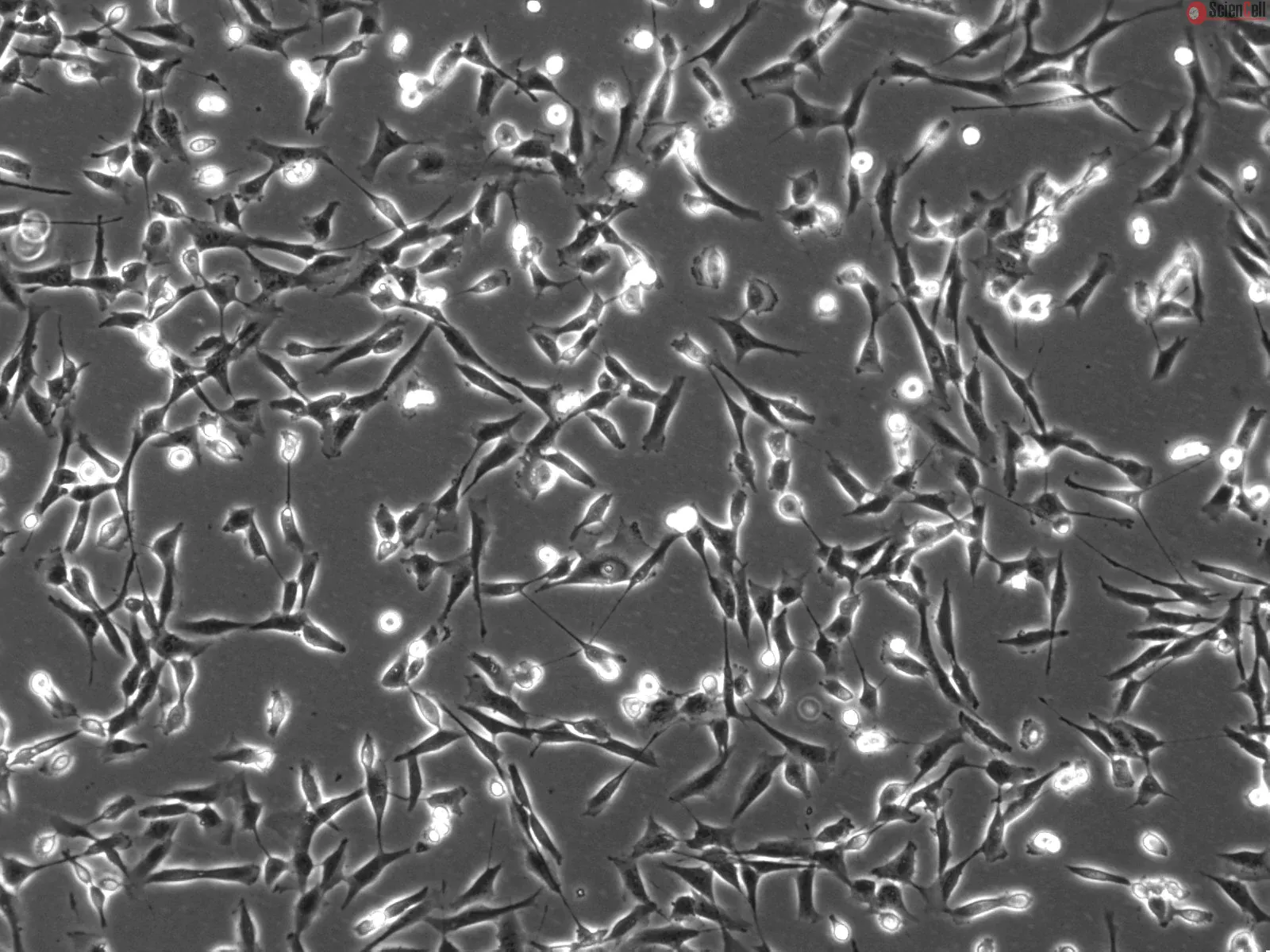
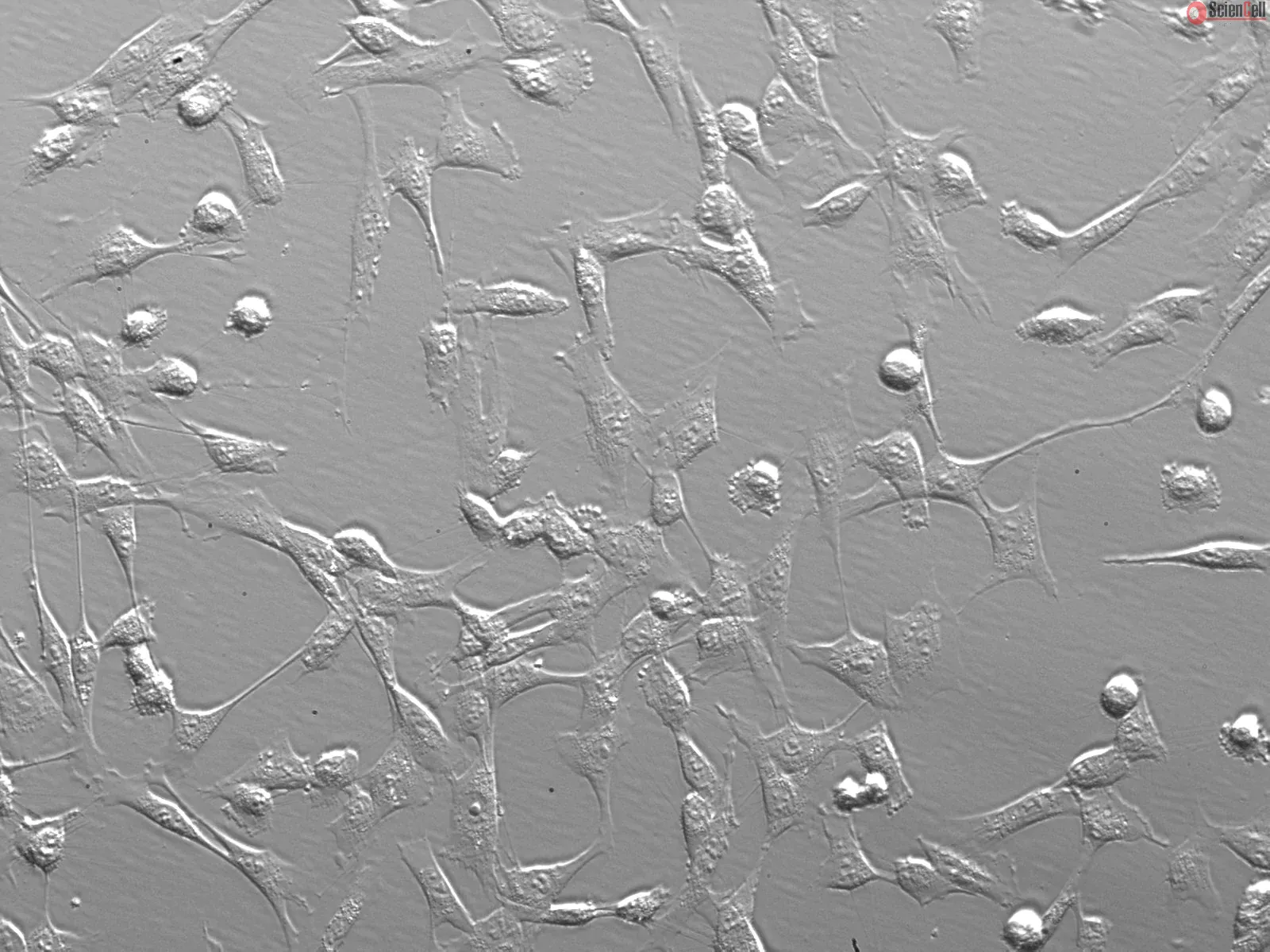
Esophageal fibroblasts, which line the lamina propria of the upper and lower esophagus, are mesenchymal cells derived from the embryonic mesoderm. Fibroblasts secrete a non-rigid extracellular matrix that is both rich in type I and/or type III collagen. They are responsible for much of the synthesis of extracellular matrix in connective tissues and play a central role in wound healing. They have been extensively used for a wide range of cellular and molecular studies, as they are one of the easiest types of cells to grow in culture. In addition, their durability makes them amenable to a variety of manipulations ranging from gene transfection to microinjection. Esophageal fibroblasts have been shown to contribute to the esophageal squamous cell carcinoma-induced angiogenesis through the TGF-β and VEGF signaling pathways.
HEsF from ScienCell Research Laboratories are isolated from human esophageal tissue. HEsF are cryopreserved at passage one and delivered frozen. Each vial contains >5 x 10⁵ cells in 1 ml volume. HEsF are characterized by immunofluorescence with antibody specific to fibronectin. HEsF are negative for HIV-1, HBV, HCV, mycoplasma, bacteria, yeast and fungi. HEsF are guaranteed to further expand for 15 population doublings under the conditions provided by ScienCell Research Laboratories.
Recommended Medium
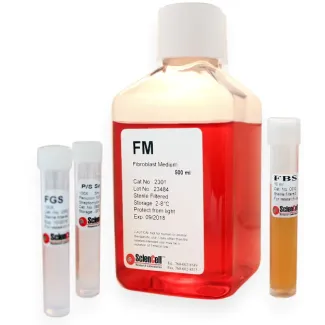
It is recommended to use Fibroblast Medium (FM, Cat. #2301) for culturing HEsF in vitro.
位于食管上、下段固有层中的食管成纤维细胞属于来源于胚胎中胚层的间充质细胞。成纤维细胞可分泌柔性的细胞外基质,该基质富含 I 型和/或 III 型胶原蛋白。它们负责结缔组织中大量细胞外基质的合成,并在伤口愈合过程中发挥核心作用。由于成纤维细胞是最易于体外培养的细胞类型之一,因此被广泛应用于多种细胞和分子生物学研究。此外,其良好的稳定性使其适用于多种实验操作,包括基因转染和显微注射等。研究表明,食管成纤维细胞可通过 TGF-β 和 VEGF 信号通路促进食管鳞状细胞癌诱导的血管生成。
ScienCell Research Laboratories 提供的人食管成纤维细胞(HEsF)分离自人食管组织。HEsF 在第一代(P1)阶段进行冻存,并以冷冻形式运输。每瓶含有超过 5 × 10⁵ 个细胞,总体积为 1 ml。HEsF 通过使用针对纤连蛋白(fibronectin)的特异性抗体进行免疫荧光染色鉴定。HEsF 经检测不含 HIV-1、HBV、HCV、支原体、细菌、酵母菌及真菌。在 ScienCell Research Laboratories 提供的培养条件下,HEsF 可保证进一步扩增至少 15 次群体倍增。
推荐培养基
建议使用成纤维细胞培养基(Fibroblast Medium,FM,产品编号 #2301)对 HEsF 进行体外培养。
Product Sheets
 2730
2730
Search for a Certificate of Analysis by Lot Number below:
Fibroblast heterogeneity remains undefined in eosinophilic esophagitis (EoE), an allergic inflammatory disorder complicated by fibrosis. We utilized publicly available si... More
Fibroblast heterogeneity remains undefined in eosinophilic esophagitis (EoE), an allergic inflammatory disorder complicated by fibrosis. We utilized publicly available single-cell RNA sequencing data (GSE201153) of EoE esophageal biopsies to identify fibroblast sub-populations, related transcriptomes, disease status-specific pathways and cell–cell interactions. IL13-treated fibroblast cultures were used to model active disease. At least 2 fibroblast populations were identified, F_A and F_B. Several genes including ACTA2 were more enriched in F_A. F_B percentage was greater than F_A and epithelial–mesenchymal transition upregulated in F_B vs. F_A in active and remission EoE. Epithelial–mesenchymal transition was also upregulated in F_B in active vs. remission EoE and TNF-α signaling via NFKB was downregulated in F_A. IL-13 treatment upregulated ECM-related genes more profoundly in ACTA2− fibroblasts than ACTA2+ myofibroblasts. After proliferating epithelial cells, F_B and F_A contributed most to cell–cell communication networks. ECM–Receptor interaction strength was stronger than secreted or cell–cell contact signaling in active vs. remission EoE and significant ligand–receptor pairs were driven mostly by F_B. This unbiased analysis identifies at least 2 fibroblast sub-populations in EoE in vivo, distinguished in part by ACTA2. Fibroblasts play a critical role in cell–cell interactions in EoE, most profoundly via ECM–receptor signaling via the F_B sub-group. Less
Esophageal fibrosis can develop due to caustic or radiation injuries. Umbilical cord–derived mesenchymal stem cells (UC-MSCs) are known to mitigate fibrosis in various ... More
Esophageal fibrosis can develop due to caustic or radiation injuries. Umbilical cord–derived mesenchymal stem cells (UC-MSCs) are known to mitigate fibrosis in various organs. However, the potential effects of UC-MSCs on human esophageal fibrosis remain underexplored. This study investigated the anti-fibrogenic properties and mechanisms of UC-MSC-derived conditioned media (UC-MSC-CM) on human esophageal fibroblasts (HEFs). HEFs were treated with TGF-β1 and then cultured with UC-MSC-CM, and the expression levels of extracellular matrix (ECM) components, RhoA, myocardin related transcription factor A (MRTF-A), serum response factor (SRF), Yes-associated protein (YAP), and transcriptional coactivator with PDZ-binding motif (TAZ) were measured. UC-MSC-CM suppressed TGF-β1-induced fibrogenic activation in HEFs, as evidenced by the downregulation of ECM. UC-MSC-CM diminished the expression of RhoA, MRTF-A, and SRF triggered by TGF-β1. In TGF-β1-stimulated HEFs, UC-MSC-CM decreased the nuclear localization of MRTF-A and YAP. Additionally, UC-MSC-CM diminished the TGF-β1-induced nuclear expressions of YAP and TAZ, while concurrently enhancing the cytoplasmic presence of phosphorylated YAP. Furthermore, UC-MSC-CM reduced TGF-β1-induced phosphorylation of Smad2. These findings suggest that UC-MSC-CM may inhibit TGF-β1-induced fibrogenic activation in HEFs by targeting the Rho-mediated MRTF/SRF and YAP/TAZ pathways, as well as the Smad2 pathway. This indicates its potential as a stem cell therapy for esophageal fibrosis. Less
ScienCell Research Laboratories (SRL) takes pride in being a resource for researchers all over the world. The publications listed here are not meant as an endorsement or confirmation of the reliability of the products.